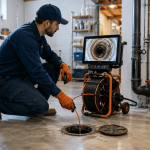
Sewer Backup in the Basement: What to Do Immediately?
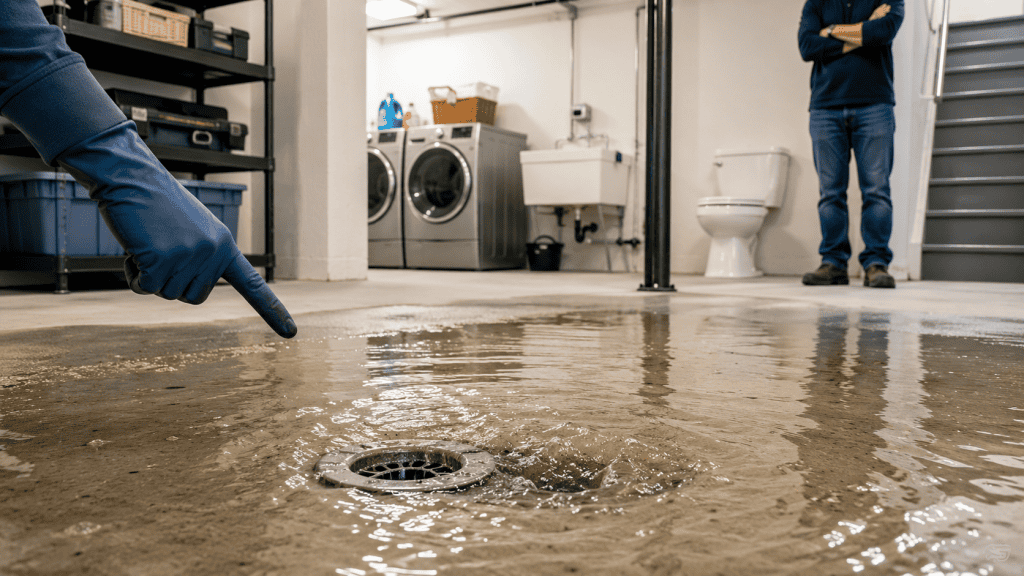
A sewer backup in the basement is a stressful situation, especially when water starts backing up through the floor drain, toilet, shower, sink, or laundry area. In many cases, the water may be contaminated, and the damage can quickly get worse if you continue using the home’s plumbing fixtures.
The priority is simple: stop adding water into the plumbing system, stay away from contaminated water, avoid electrical hazards, document the damage if needed, then request a quick intervention to identify the cause of the sewer backup.
Here's what to do immediately if you see water backing up in your basement, and how to tell if the problem is coming from a clogged main drain, from a municipal backup, a missing or defective backwater valve, or another plumbing problem.
The first steps to take in case of a sewage backup
When there is a sewer backup in the house, every minute counts. The goal is not to fix everything yourself, but to reduce the risks and avoid making the situation worse before a plumber or drain specialist arrives.
1. Immediately stop using water in the house.
If water backs up through a basement floor drain, toilet, shower, or sink, stop using plumbing fixtures. This means:
- Do not flush the toilet;
- do not take a shower or bath;
- Do not use the washing machine.;
- Do not run the dishwasher;
- Don't let the faucets run.;
- avoid any unnecessary use of water until the cause is known.
If the main drain is clogged, the water discharged by the home’s plumbing fixtures may no longer flow properly toward the sewer. It can then look for the lowest point to come back up, often the basement floor drain, a basement toilet, a shower, or a laundry drain.
2. Avoid all contact with backflow water
Water from a sewer backup can contain wastewater, bacteria, organic matter, and other contaminants. Even if the water appears clear, it should be treated as potentially contaminated water.
Avoid walking in it barefoot, keep children and animals away, and do not attempt to clean it without adequate protection. If you must approach to limit damage, wear at least waterproof boots and gloves.
3. Be careful with electricity
A basement with water on the floor can present a serious electrical hazard, especially if the water gets close to electrical outlets, extension cords, appliances, an electrical panel, a water heater, or other plugged-in equipment.
Do not touch an electrical panel if you are in water or if the floor around you is wet. If the situation appears dangerous, move away and contact the appropriate services. The safety of occupants takes precedence over items to be retrieved.
4. Limit damage only if safe
If the water is shallow and the area is safe, you can move some items out of the affected area: boxes, documents, light furniture, carpets, chemicals, or valuables. Do not take unnecessary risks to save equipment.
If you have a portable pump or wet vacuum designed for water, use it only if the electrical source is safe and you know what you are doing. When in doubt, wait for a professional.
5. Take photos and contact your insurer if necessary
Before discarding items or having the premises cleaned, take photos and videos of visible damage: water level, affected drains, affected appliances, floors, walls, furniture, boxes, and damaged contents.
According to your contract, certain water damages related to sewage backup may require additional coverage. Therefore, it is useful to contact your insurer quickly to know the steps to follow.
How to recognize a sewage backup in the basement?
A sewage backup doesn't always present itself the same way. Sometimes, water suddenly and clearly backs up through the floor drain. Other times, the signs start more subtly.
Common signs include:
- water backing up through the floor drain in the basement;
- gurgling in the toilet, tub, shower, or sinks;
- toilet backflow, especially in the basement or on the ground floor;
- water backing up into the shower or tub when another fixture drains;
- persistent sewer smell in the basement;
- Washing machine drain or standpipe overflowing;
- Slow drain in multiple devices at once;
- salty, grayish, or brownish water near a drain.
A single slow-draining sink could be a localized clog. However, when multiple fixtures are backing up or draining poorly at the same time, it suggests a deeper problem within the system, such as a clogged main drain or a sewage network overload.
Why is water backing up through the floor drain?
The floor drain is often located at the lowest point of the basement. When water can no longer drain normally to the sewer, it can come back up through this low point. That's why a Sewer backup in the basement often appears first around the floor drain.
Here are the possible causes.
Clogged main drain
The main drain carries wastewater from the house to the sewer system or to the appropriate facility depending on the type of property. If it is clogged with debris, grease, paper, wipes, roots, sediment, or a pipe collapse, water may no longer drain.
In this case, each use of water in the house can worsen the backup: a toilet flush, a load of laundry, a shower, or even a sink can add water to an already blocked pipe.
For this type of problem, a service drain unclogging may be necessary quickly to clear the blockage and restore flow.
Sewage network overload during heavy rains
During heavy rain, rapid thawing, or overloading of the municipal sewer system, the water level in the sewers can rise. If the building is not well protected, water can back up into plumbing fixtures located in the basement.
This type of situation can affect several homes in the same area, especially during heavy rain events. Even if the municipal system is involved, protecting the building often depends on private installations: check valves, drainage, connections, the slope of the land, gutters, sump pits, and general maintenance.
Check valve missing, stuck, or defective
A check valve is used to reduce the risk of sewage flowing back into the house. It normally allows water to flow out of the building, but closes when water tries to flow back in.
If the backflow preventer is missing, improperly installed, inaccessible, blocked by debris, or worn out, it may not adequately protect the basement. After a backflow incident, it is therefore important to check whether it is present, where it is located, whether it is accessible, and what condition it is in.
To better understand this preventive role, you can consult our page on check valve.
Roots, sagging pipe, or damaged pipe
Roots can penetrate a cracked or poorly sealed pipe. Over time, they trap paper and other debris, eventually creating a major blockage. In other cases, a pipe may be crushed, sagging, misaligned, or damaged by age, ground movement, or outdoor construction work.
When a clog recurs frequently after being cleared, you should consider whether the problem might be structural. That’s when a camera inspection comes in handy.
When should you call for a sewage backup emergency?
You should call for service right away if the water keeps rising, if several appliances are backing up, or if you’re not sure whether the problem is caused by a simple clog or the main drain.
A sewage backup emergency is particularly concerning if:
- water is backing up through the floor drain;
- the bathroom in the basement is overflowing or gurgling;
- the shower or bathtub fills with dirty water;
- the washer is causing a backup in the floor drain;
- The problem has returned after a recent drain cleaning;
- several drains are slow at the same time;
- A strong sewer smell is present.;
- backflow occurs during or after heavy rain;
- You don't know the condition of your check valve.
In these situations, avoid chemical drain cleaners. They can be ineffective on a main clog and complicate the repair, especially if they remain in standing water. Mechanical intervention with the right tools is generally more appropriate.
For an active situation, you can request assistance via the page contact or consult the services of plumbing provided by Plomberie Urgence.
Emergency drain cleaning: what the plumber looks to confirm
During a service call for a sewer backup in the basement, the professional first tries to understand where the blockage is coming from and whether the problem is local or related to the main drain.
He can ask questions like:
- Does water back up through the floor drain?
- Is the toilet backing up or gurgling?
- Are all the drains in the house slow?
- Did the problem appear after heavy rain?
- Is there an accessible check valve?
- Has this problem happened before?
- Is there a cleanout or access point to the main drain?
Unclogging can be done through different access points depending on the configuration: floor drain, cleanout, accessible flap, main pipe, or other access point. The immediate goal is to restore flow and reduce the risk of water continuing to come back into the basement.
If the blockage is caused by normal accumulation, intervention can resolve the problem. But if the backflow is recurrent, if there are roots, or if the pipe appears to be damaged, further inspection may be recommended.
After the emergency: when to do a camera inspection?
A camera inspection is not always the first step when water is actively backing up. In many cases, the pipe needs to be cleared first so the water can drain properly. After that, the camera can help determine why the problem happened.
Camera inspection is particularly useful when:
- The backflow occurs more than once;
- The main drain often gets clogged.;
- roots are suspected;
- The house is older.;
- There's a persistent sewer smell;
- unclogging temporarily solves the problem, but not permanently;
- we want to locate a break, a settlement, or an obstruction;
- We want to know the actual condition of the pipeline before starting work.
The camera allows you to see inside the pipe: roots, sediment, cracks, open joints, problematic slope, sagging, grease buildup, or blockages. This eliminates guesswork and allows for a more tailored solution to be recommended.
In summary: unclogging addresses the emergency; camera inspection helps understand the cause when the problem is recurring, suspected, or more complex.
The role of the check valve in preventing backflow
A check valve is one of the most important elements for reducing the risk of sewage backup in a basement. Its role is to prevent water from the sewer from flowing back into the building's plumbing fixtures.
A check valve can protect certain appliances or sections of the plumbing system, depending on the configuration. It must be installed correctly, remain accessible, and be maintained. An inaccessible, blocked, or improperly sized check valve can provide a false sense of security.
After a backup, it is relevant to check:
- if there is one or more check valves in the building;
- where they are located;
- if they are accessible for inspection and maintenance;
- if they protect the right devices;
- if they are clean and functional;
- if the configuration meets the actual needs of the building.
A backwater valve does not replace good main drain maintenance, but it can significantly reduce the risk of damage during a sewage backup.
What not to do during a sewage backup
In a panic, some actions can worsen the situation or create a safety risk. Here's what it's best to avoid.
- Do not continue to use water to “see if it passes.” If the main drain is clogged, this adds water to the problem.
- Do not flush the toilet, especially if the toilet gurgles or water backs up elsewhere.
- Do not use the washing machine, as it quickly drains a large amount of water.
- Do not pour chemical drain cleaner in stagnant or contaminated water.
- Do not walk in the water without protection., especially if it can be contaminated.
- Do not touch electrical equipment in a wet area.
- Do not disassemble a valve or drain if the water is under pressure or if you don't know what's going on.
The sensible thing to do is to stabilize the situation, limit water usage, and have the cause of the backflow checked.
Sewage backup or water infiltration: how to tell the difference?
A wet basement isn't always caused by a sewer backup. It can also be due to foundation seepage, a problematic French drain, a faulty sump pump, inadequate ground slope, or water entry through a window, door, or crack.
Here's a simple way to distinguish between situations:
- If water backs up through a drain, toilet, shower, or washing machine standpipe, it could be a sewer backup;
- if water enters through a wall, a crack, a window, or the base of a foundation, it can be considered a leak;
- If water appears near a sump pit, there may be a pump or drainage problem;
- If water only comes in during heavy rains, you also need to check the exterior drainage, gutters, the ground, and backflow preventers.
It's possible that multiple problems can combine. For example, heavy rain can overload the system, cause water to rise in the sewers, expose a faulty check valve, and at the same time reveal a drainage problem around the foundation.
How to reduce the risk of the problem recurring?
Once the emergency is under control, it's important to understand the cause of the backup. Otherwise, the problem may return during the next heavy rain, the next intense use of the plumbing, or the next blockage in the main drain.
Preventive measures may include:
- Have the main drain checked and cleaned if clogs recur frequently.;
- perform a camera inspection when a structural problem is suspected;
- install or have a backflow preventer checked;
- keep the louvers accessible for maintenance;
- Avoid flushing wipes, grease, sanitary napkins, hair, and debris down drains.;
- divert water from gutters away from the foundation;
- correct the land slopes that direct water towards the house;
- maintain the sump pump if the building has one;
- Verify insurance coverage for sewage backup and water damage.
The right solution depends on the actual cause. A simple clog doesn't require the same work as a collapsed pipe, a missing flap, or an overflow problem during heavy rains.
In summary: what to do right now?
If you have a sewer backup in the basement, the most important things to remember are:
- Stop using water in the house immediately.;
- Do not flush.;
- Do not use the shower, washing machine, or dishwasher;
- avoid contact with backflowed water;
- Stay away from electrical hazards.;
- Move important belongings only if it is safe.;
- Take pictures to document the damage;
- Have a professional quickly inspect the main drain, the backwater valve, and the cause of the backup.;
- Consider a camera inspection if the problem recurs or if a damaged pipe is suspected.
A sewage backup is not just a matter of odor or cleaning. It's often a sign that a pipe, a valve, or the drainage system needs to be checked. The sooner the cause is identified, the more damage can be limited and the risk of the situation recurring can be reduced.
FAQ – Sewage Backup in Basement
What to do immediately in case of a sewer backup in the basement?
Immediately stop using water in the house. Do not flush the toilet, use the shower, washing machine, dishwasher, or faucets. Avoid contact with backwater, stay away from electrical hazards, take photos of the damage if possible, and then quickly call a professional to check the cause of the backup.
Why does water back up through the floor drain?
The floor drain is often located at the lowest point in the basement. If water can no longer drain properly to the sewer, it can back up through this low point. This can be caused by a clogged main drain, an overloaded sewer system, a missing or faulty backwater valve, roots, a settled pipe, or a damaged pipe.
Can I continue to use the toilet, shower, or washing machine during a backup?
No. If the main drain is clogged or if water is backing up into the basement, every use of water can worsen the situation. A toilet flush, a shower, or a load of laundry can add water to an already blocked pipe and increase the backup.
Is sewage backup water dangerous?
Yes, it should be considered potentially contaminated. The water may contain wastewater, bacteria, organic matter, and other contaminants. You should avoid walking in it without protection, keep children and pets away, and avoid cleaning without appropriate equipment.
When should you call for a sewage backup emergency?
You should request service quickly if water backs up through the floor drain, if a toilet overflows or gurgles, if a shower or tub fills with dirty water, if several drains are slow at the same time, or if the problem occurs during or after heavy rain. These signs may indicate a problem with the main drain or insufficient backwater protection.
Does a drain cleaning always fix a sewage backup?
A drain cleaning can resolve the emergency if the problem is caused by an obstruction in the pipe. However, if the backflow recurs frequently, if roots are present, or if the pipe is damaged, it may only temporarily fix the problem. In such cases, a more thorough inspection may be necessary.
When should a camera inspection be done after a backflow?
A camera inspection is useful when backflow occurs, when the main drain clogs often, when roots are suspected, when the house is older, or when you want to check the actual condition of the pipe. It allows you to see inside the pipe and identify roots, debris, cracks, open joints, collapses, or obstructions.
Can a backwater valve prevent a sewage backup?
A check valve can reduce the risk of sewage backing up into the home. It normally allows water to flow out of the building but closes when water tries to flow back in the opposite direction. To be effective, it must be properly installed, accessible, clean, and functional.
How to tell if it's a sewage backup or water infiltration?
If water backs up through a drain, toilet, shower, or washing machine standpipe, it could be a sewer backup. If water enters through a wall, crack, window, or the bottom of a foundation, it could be infiltration instead. In some cases, multiple problems can occur at the same time, especially during heavy rain.
Sources and references
- City of Montréal. Protecting your building from heavy rains.
- City of Montreal. Check valve: The key to preventing sewer backup and flooding.
- Régie du bâtiment du Québec. Clapets antiretour.
- Corporation des maîtres mécaniciens en tuyauterie du Québec. How to prevent sewage backup?.
- CAA-Québec. Drainage and Foundation Guide: Prevent or Repair?.
- Government of Quebec. In case of flood 2026.
- Health Canada. Flood cleanup: remember indoor air quality.
- Infoassurance. Sewage backup: what to do to protect yourself?.